
You may see ratings on UPS with KVA vs KW. Firstly, what is KVA and what is KW? Both are units of power but have different meanings. To start with the K, is just like the K in Kg, or Km, e.g. a kilo or a thousand. So 1KVA = 1000VA, 1KW = 1000W.
Now Power, in an electric circuit is the product of Voltage and Current. Voltage is measured in Volts, given the symbol, V, and current in Amps, given the symbol A. So Power is Volts(V) x Amps(A), hence VA.
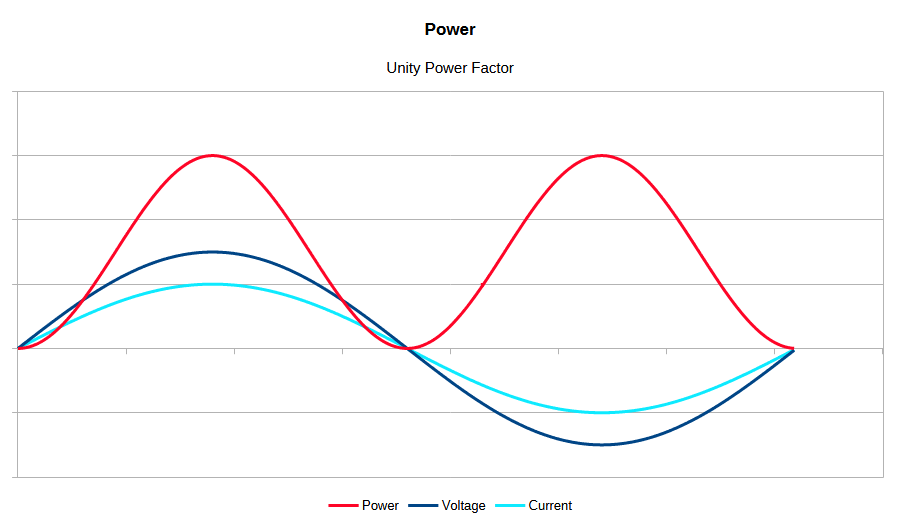
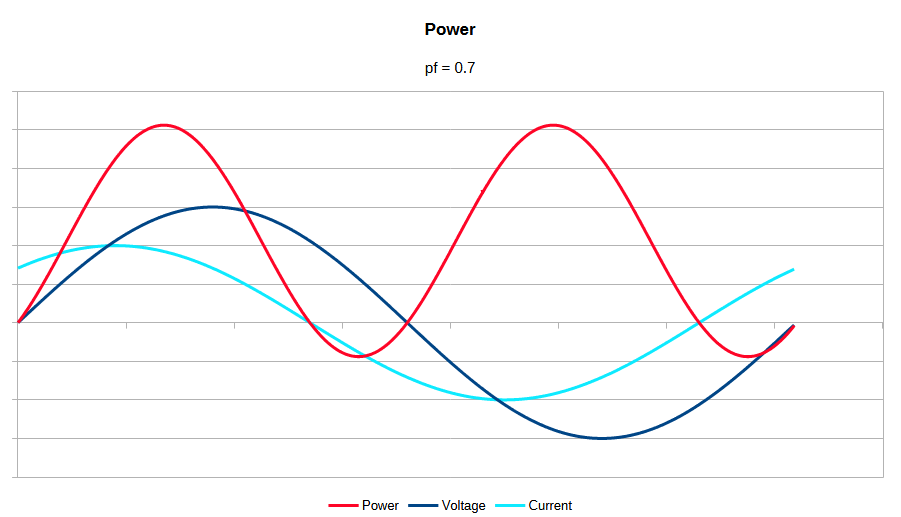
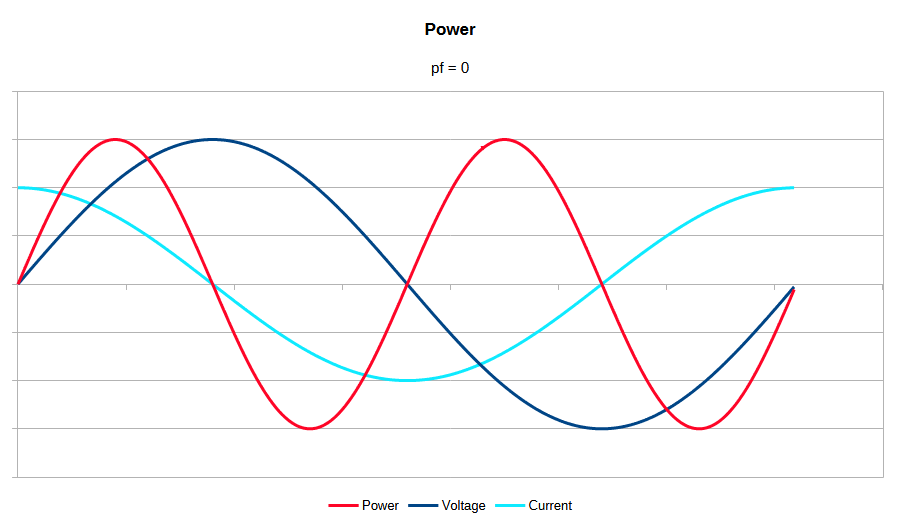
However, in AC circuits, the Voltage and Current need not be in synch with each other, and if we were to monitor the actual current waveform against the voltage waveform, you can see that, in the example below, the actual product of voltage and current gives a different answer depending upon the synch of the waveforms. This difference is called the power factor (pf), and it’s what gives a measure of the meaningful power consumption done by the load. This power is measured in Watts (W) and so Power (W) = Volts (V) x Current(A) x pf. Where pf is a number between 0 and 1, where a 0 would mean the load is purely inductive, or capacitive and 1 would mean purely resistive.
So Why do UPS have both VA and W?
When PC’s first hit the streets, and protection against power disturbances became a thing, UPS were designed and marketed to meet the requirements of that load. A typical computer PSU would have a power factor anywhere from 0.5 to typically around 0.8. The early UPS manufacturers would design their products to meet this type of load, and hence the early UPS have both a VA and a W rating. For example, an 800W PSU with a 0.8pf would draw 1000VA from the UPS. This convention has just stuck.
Note that neither number should be exceeded. Eg a load of 1000VA / 800W cannot be powered from a UPS rated at 1000VA/700W.
Why are UPS now specified with pf=1.0?
The electricity generating companies do not like loads with poor power factors (eg less than 1), and will penalize facilities that have this. In addition, design standards have emphasized the need to have loads with unity power factors. This is generally achieved by utilizing power factor correction circuitry. In this case when pf=1.0, Power (W) = Power (VA).
What does this mean when choosing a UPS?
Since modern loads are generally power factor corrected, the VA rating is now more or less obsolete, but has stuck around for legacy reasons. So when selecting a UPS for your load, simply ignore the VA rating of the UPS and go by the W rating.
For example, if you have a load of 700W, the VIX3100+, a 1KVA / 600KW UPS will not suffice even though it has a 1000VA rating, whereas the TX1000D with a 1KW/900W rating will suffice. So unfortunately you can no longer go with the headline figure and may need to look at the specs.


